

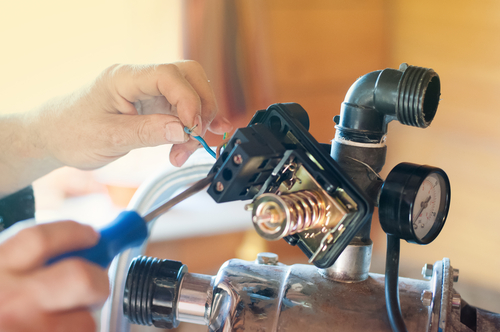
Industrial equipment across Sacramento depends on hydraulic systems to move loads, operate machinery, and keep production processes running. From manufacturing and warehouse operations along the Florin Perkins Road industrial corridor to facilities serving West Sacramento and the broader Sacramento Valley, hydraulic performance can have a direct effect on productivity and downtime.
Hydraulic accumulators play an important supporting role in many of these systems. Understanding what they do, how they fail, and when they need professional attention can help local equipment operators make better maintenance decisions.
Quick answer: A hydraulic accumulator stores pressurized hydraulic fluid and releases that stored energy when the system needs it. Depending on the equipment design, an accumulator can supplement pump flow, maintain pressure, absorb hydraulic shock, compensate for leakage, and provide limited emergency energy. Correct sizing, charging, installation, and maintenance are essential for safe and reliable operation.
What local equipment operators should know
-
Hydraulic accumulators can store energy that is available when system demand temporarily exceeds pump output.
-
Accumulators may reduce pressure fluctuations and help protect components from hydraulic shock.
-
Sacramento’s hot, dry summers can make temperature management an important consideration for hydraulic equipment.
-
Warehouses, manufacturing facilities, material-handling operations, and other industrial sites may use equipment with accumulator-supported hydraulic circuits.
-
An accumulator is a pressure vessel and should be serviced according to the equipment and accumulator manufacturer’s requirements.
Why Do Hydraulic Accumulators Matter in Sacramento Industrial Equipment?
Hydraulic accumulators matter in Sacramento industrial equipment because they can improve pressure stability, provide supplemental flow, and absorb pressure spikes in systems designed to use them. Those functions are especially valuable when machinery operates repeatedly, handles variable loads, or needs dependable hydraulic response throughout a demanding workday.
Sacramento has an established industrial and distribution presence. The City of Sacramento identifies advanced manufacturing as one of its linking industries, while industrial facilities and warehouse development can be found around corridors such as Florin Perkins Road. The Port of West Sacramento also handles agricultural, industrial, heavy-equipment, and bulk cargo.
For operations in these environments, unexpected hydraulic problems can interrupt material movement, production, loading, or equipment availability. Hydraulic Power Sales helps customers address hydraulic equipment needs, and we understand why selecting and maintaining appropriate system components matters when uptime is a priority.
What Do Local Climate Conditions Mean for Hydraulic Systems?
Local climate conditions mean Sacramento equipment operators should account for sustained summer heat when monitoring hydraulic system performance. High ambient temperatures can affect hydraulic fluid temperature, seals, hoses, and overall operating conditions, making routine inspection and appropriate cooling particularly important during the warmer part of the year.
National Weather Service data illustrates the local heat. At Sacramento Metropolitan Airport, August 2026 had an average maximum temperature of 94.1°F, with 25 days reaching at least 90°F.
An accumulator does not replace proper system cooling or correct fluid selection. However, an appropriately designed accumulator can support system efficiency by supplying stored hydraulic energy during short periods of increased demand rather than requiring the pump alone to satisfy every peak-flow condition.
How Do Hydraulic Accumulators Affect Industrial Operations?
Hydraulic accumulators affect industrial operations by helping hydraulic systems respond to changing pressure and flow requirements without relying exclusively on continuous pump output. Depending on the circuit, they may support faster actuator response, maintain pressure during brief interruptions, or cushion sudden pressure changes.
That can matter for Sacramento County businesses using hydraulic equipment in manufacturing, material handling, agricultural support, fabrication, distribution, and other industrial applications.
The specific benefit depends on system design. Not every hydraulic circuit requires an accumulator, and installing one without proper engineering, sizing, or charging can create performance and safety problems.
What Are the Warning Signs of a Hydraulic Accumulator Problem?
Hydraulic accumulator problems can show up as changes in pressure, machine response, pump cycling, noise, or overall hydraulic performance. Because similar symptoms can originate elsewhere in the hydraulic system, troubleshooting should consider the accumulator alongside pumps, valves, cylinders, fluid condition, and controls.
Watch for:
-
More frequent pump cycling than the equipment normally exhibits.
-
Noticeable pressure fluctuations during normal machine operation.
-
Slower or inconsistent actuator response.
-
Increased hydraulic shock or banging during valve changes.
-
An inability to maintain pressure as expected.
-
Visible fluid leakage around accumulator connections or associated components.
-
Unexpected changes in equipment performance after extended operation.
-
Evidence that the accumulator’s precharge is outside the manufacturer’s specified range.
These symptoms do not automatically prove the accumulator has failed. They indicate that the hydraulic system should be evaluated.
When Should You Call a Hydraulic Professional?
You should call a hydraulic professional when an accumulator requires pressure testing, precharge adjustment, internal inspection, replacement, or diagnosis beyond routine visual checks. Accumulators can contain stored energy even when the equipment is shut down, so service procedures require proper depressurization and appropriate safety practices.
Operators can monitor equipment behavior, look for external leaks, note unusual cycling, and follow manufacturer inspection schedules. Work involving stored pressure, accumulator disassembly, gas charging, or component replacement should be handled only by qualified personnel using procedures appropriate for that equipment.
This is particularly important for Sacramento industrial operations where one malfunctioning machine can affect a larger production, loading, or material-handling process.
What Commonly Causes Hydraulic Accumulator Problems?
Hydraulic accumulator problems commonly result from incorrect precharge, seal or bladder deterioration, contamination, leakage, temperature effects, or incorrect sizing for the application. Finding the actual cause matters because simply replacing a component may not correct an underlying system problem.
1. Incorrect precharge: An accumulator with an improper gas precharge may not store or release energy as the circuit designer intended.
2. Seal or bladder deterioration: Elastomeric components can wear over time, with service life influenced by operating conditions, fluid compatibility, pressure cycles, and temperature.
3. Hydraulic contamination: Contaminated fluid can damage numerous system components and contribute to broader reliability problems.
4. Excessive operating temperature: Sacramento Valley summer conditions can add to the thermal load already created by hydraulic operation. Equipment cooling and fluid temperature deserve attention during prolonged hot-weather operation.
5. Improper sizing or application: An accumulator must be selected for the required pressure, volume, flow demand, fluid, temperature range, and operating cycle. Bigger is not automatically better.
How Can Sacramento Businesses Maintain Hydraulic Accumulators?
Sacramento businesses can maintain hydraulic accumulators by following manufacturer inspection intervals, monitoring precharge and system pressure, controlling contamination, and paying close attention to hydraulic temperature during hot weather. Maintenance should consider the entire hydraulic circuit rather than treating the accumulator as an isolated component.
Useful practices include recording pressure changes, watching pump cycling behavior, inspecting accessible connections for leaks, maintaining proper hydraulic fluid cleanliness, and checking cooling equipment.
Summer preparation is particularly worthwhile. Before periods of sustained high temperatures, local facilities can inspect hydraulic coolers, verify fluid condition, review operating temperatures, and address existing leaks or abnormal system behavior.
DIY work should stop before opening, disassembling, charging, or otherwise servicing a pressurized accumulator unless the person performing the work is trained and equipped for that procedure.
What Results Can You Expect From Proper Accumulator Service?
Proper accumulator service can restore the pressure-management and energy-storage functions the accumulator was designed to provide. Depending on the circuit, that may mean more consistent equipment response, normal pump cycling, reduced pressure shock, or restored supplemental flow during peak demand.
Results depend on the condition of the complete hydraulic system. If a pump, valve, cylinder, cooler, or another component is responsible for the symptoms, accumulator service alone will not solve the problem.
For Sacramento equipment operators, accurate diagnosis is therefore more valuable than replacing parts based solely on symptoms.
What Mistakes Should Equipment Operators Avoid?
Equipment operators should avoid treating every pressure problem as an accumulator failure, adjusting precharge without specifications, and servicing stored-pressure components without proper procedures. These mistakes can increase downtime, damage components, or introduce unnecessary safety risks.
Mistake: Recharging without diagnosing the cause.
Consequence: A recurring pressure problem may return if leakage, component wear, or another system issue remains.
Better approach: Diagnose the hydraulic circuit and determine why performance changed.
Mistake: Ignoring temperature.
Consequence: Heat-related system problems can be mistaken for isolated component failures.
Better approach: Consider fluid temperature, cooling performance, and Sacramento’s summer operating environment.
Mistake: Choosing an accumulator by physical size alone.
Consequence: The component may not match system pressure, volume, or flow requirements.
Better approach: Select the accumulator according to application specifications.
What Is a Common Sacramento Industrial Scenario?
A common Sacramento industrial scenario is a hydraulic machine that operates normally when first started but begins cycling differently or responding inconsistently as production continues. Operators may initially suspect the pump because the symptoms appear as a pressure or flow problem.
A complete evaluation could reveal several possible causes, including accumulator precharge, hydraulic temperature, leakage, valve behavior, or pump condition. The correct response is to evaluate the system as a whole rather than assume one component is responsible.
This scenario can apply to equipment in industrial areas from South Sacramento and Florin Perkins to West Sacramento, where dependable machinery can be important to daily production and distribution schedules.
What Hydraulic Service Solutions Can Address Accumulator Issues?
Hydraulic service solutions can address accumulator issues through system troubleshooting, component evaluation, correct accumulator selection, and appropriate maintenance or replacement. The right solution depends on what the accumulator is supposed to accomplish within the hydraulic circuit.
We can help customers evaluate hydraulic component needs and identify appropriate options for their equipment rather than relying on guesswork.
How Should You Compare Accumulator Repair, Replacement, and System Diagnosis?
Accumulator repair, replacement, and system diagnosis should be compared according to component condition, manufacturer requirements, equipment design, downtime considerations, and the root cause of the performance problem. Diagnosis usually comes first when the source of the problem is uncertain.
A serviceable accumulator may need maintenance rather than replacement. A damaged or unsuitable component may require replacement. If repeated accumulator problems occur, the better long-term approach may involve examining pressure settings, contamination, temperature, or the overall circuit design.
For local facilities, the goal should be dependable hydraulic operation rather than simply getting the machine running temporarily.
What Areas Can Benefit From Hydraulic Equipment Support?
Hydraulic equipment support can be relevant throughout Sacramento and nearby industrial communities where manufacturing, warehousing, agriculture, construction, and material-handling equipment rely on fluid power. That includes operations in Sacramento County as well as West Sacramento, Elk Grove, Rancho Cordova, Roseville, and surrounding parts of the Sacramento Valley.
Local operating environments vary, but reliable hydraulic pressure and component condition remain fundamental wherever hydraulic machinery is used.
What Can Happen If an Accumulator Problem Is Ignored?
Ignoring an accumulator problem can lead to worsening pressure instability, excessive pump cycling, reduced machine performance, or additional stress on other hydraulic components. The exact consequences depend on the accumulator’s purpose and the design of the circuit.
Waiting can also make troubleshooting harder if multiple components begin showing symptoms. For Sacramento businesses working around production or delivery schedules, addressing abnormal hydraulic behavior early can help reduce the chance that a manageable maintenance issue turns into extended equipment downtime.
FAQ About Hydraulic Accumulators in Sacramento
What does a hydraulic accumulator do?
A hydraulic accumulator stores energy in a hydraulic system by holding pressurized fluid against a compressible medium or other energy-storage mechanism. When system conditions require it, the accumulator can release fluid. Applications include supplemental flow, pressure maintenance, shock absorption, leakage compensation, and limited emergency operation.
Are hydraulic accumulators useful in Sacramento manufacturing facilities?
Yes, hydraulic accumulators can be useful in Sacramento manufacturing facilities when the equipment’s hydraulic circuit is designed to benefit from stored energy, supplemental flow, or pressure stabilization. Their usefulness depends on the machine and application, so selection should be based on operating pressure, required volume, cycle demands, temperature, and manufacturer specifications.
Does Sacramento’s summer heat affect hydraulic accumulators?
Yes, Sacramento’s summer heat can influence the operating environment of the entire hydraulic system, including its accumulator. Temperature affects hydraulic fluid and gas behavior, while prolonged heat can also affect seals and other components. Operators should monitor fluid temperature, cooling performance, leakage, and equipment behavior during sustained hot-weather operation.
How often should an accumulator be checked?
Accumulator inspection frequency should follow the accumulator and equipment manufacturer’s recommendations, along with the demands of the application. High-cycle or demanding industrial equipment may require closer monitoring than lightly used machinery. Sacramento operators should also investigate changes in pump cycling, pressure stability, leaks, or machine response rather than waiting for a scheduled inspection.
Can I check an accumulator myself?
Operators can perform appropriate visual and operational checks, but stored-pressure service requires special care. Looking for external leaks or noting unusual machine behavior may be part of routine monitoring. Testing precharge, charging the accumulator, opening components, or performing pressure-related service should only be done by personnel qualified for the specific equipment and procedure.
Why is my hydraulic pump cycling more frequently?
More frequent pump cycling can result from an accumulator that is not functioning as intended, but other hydraulic problems can produce similar symptoms. Leakage, pressure settings, valve conditions, and system demand should also be considered. A Sacramento industrial facility experiencing a clear change in normal cycling should have the complete circuit evaluated.
Should a damaged accumulator be repaired or replaced?
Whether a damaged accumulator should be repaired or replaced depends on its construction, condition, manufacturer guidance, available service parts, and the nature of the failure. A professional evaluation can determine whether servicing is appropriate or whether replacement is the safer and more practical option for the specific hydraulic system.
Where are hydraulic accumulators used around Sacramento County?
Hydraulic accumulators may be found in industrial machinery, manufacturing equipment, material-handling systems, mobile equipment, and other hydraulic applications throughout Sacramento County. Their actual use depends on machine design. Facilities in local industrial and distribution areas may encounter several different accumulator types and applications across their equipment fleets.
Keep Sacramento Hydraulic Equipment Ready for the Work Ahead
A properly applied hydraulic accumulator can be an important part of reliable industrial equipment, but its performance depends on correct selection, charging, operating conditions, and maintenance. For Sacramento-area businesses, understanding changes in pressure, cycling, and machine response can help identify hydraulic problems before they cause greater disruption.
Support Reliable Hydraulic Performance in Sacramento
We help customers address hydraulic component and equipment needs with solutions matched to the application.