
Hydraulic systems are at the heart of many industrial, mobile, and manufacturing applications. From heavy machinery to aerospace equipment, they play a crucial role in powering complex operations. However, like any mechanical system, their efficiency and longevity rely heavily on how well they are maintained. One of the most critical aspects of maintenance is filtration. Proper hydraulic filtration not only ensures the smooth operation of the system but also extends its service life. Understanding how hydraulic filtration systems work and their importance in reducing hydraulic system contamination is key to maximizing equipment performance and minimizing downtime.
Understanding Hydraulic System Contamination
Contamination is the primary enemy of hydraulic systems. It can originate from a wide range of sources: dirt entering through worn seals, metal particles from component wear, or even water from condensation. Regardless of the source, contamination can have serious consequences for the health of a hydraulic system. It accelerates component wear, reduces fluid effectiveness, and can lead to unexpected system failures.
There are several types of contaminants that affect hydraulic systems. Solid particles such as metal shavings and dust are abrasive and cause surface damage to critical components like pumps and valves. Water contamination leads to rust and fluid degradation, while air bubbles (aeration) can cause erratic movement and reduced system responsiveness. Chemical contamination, including mixing incompatible fluids or the breakdown of additives, also compromises system performance.
Hydraulic system contamination is inevitable, but its impact can be controlled. This is where hydraulic filtration systems play an essential role. By capturing and removing contaminants from the fluid, filtration protects vital components, maintains efficiency, and significantly extends system life.
How Hydraulic Filtration Systems Work
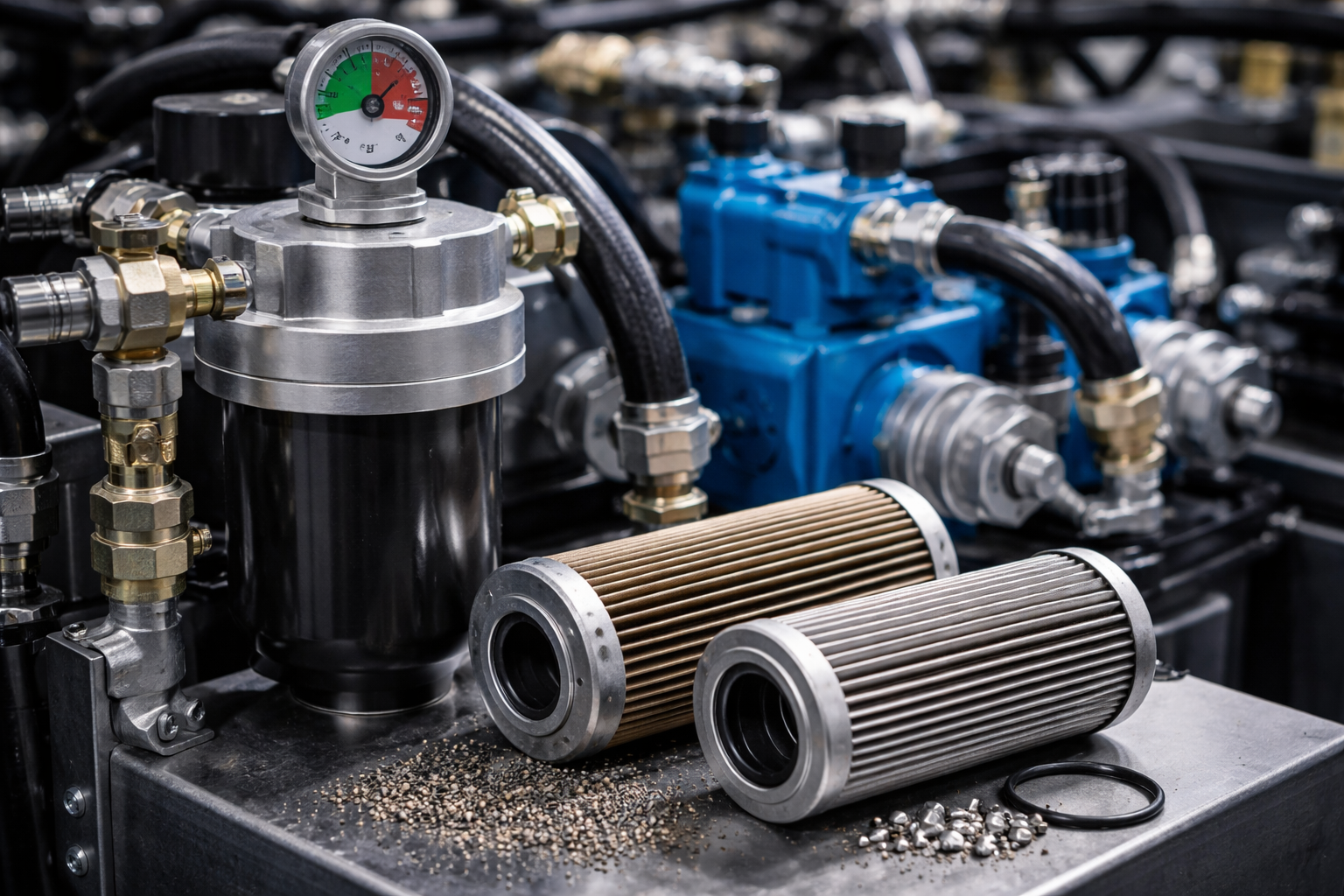
Hydraulic filtration systems are designed to clean the hydraulic fluid circulating through machinery. These systems typically include filters placed at various locations in the hydraulic circuit: suction filters near the pump inlet, pressure filters on the outlet side of the pump, and return-line filters on the way back to the reservoir. In some systems, off-line filtration loops may also be used for continuous cleaning without interrupting normal operation.
Each filter within a hydraulic system is built to capture particles of a specific size, defined by its micron rating. Filters are typically made from materials like wire mesh, paper, or synthetic fibers, each with varying capacities for capturing contaminants. Some filters also include water-absorbing elements to combat moisture ingress.
One of the core principles behind proper hydraulic filtration is ensuring the right filter is installed in the right place. A high-efficiency pressure filter, for example, is essential after the pump to protect sensitive components downstream. Similarly, return-line filters catch wear particles before fluid re-enters the reservoir. Suction filters prevent large debris from damaging the pump during intake.
By strategically placing filters and choosing the right filtration media, hydraulic filtration systems provide layered protection. This helps reduce the total contamination load in the system, slows down the rate of wear, and prevents premature failure of components.
Benefits of Proper Hydraulic Filtration
The advantages of proper hydraulic filtration are both immediate and long-term. Clean hydraulic fluid improves overall system performance, ensuring smooth and consistent operation. Machines respond faster, operate more precisely, and are less prone to malfunctions. But the real value lies in the long-term benefits of component protection and reduced maintenance.
Proper hydraulic filtration significantly reduces the risk of costly repairs. Contaminated fluid leads to excessive wear on pumps, valves, actuators, and cylinders. This not only affects system performance but also shortens the lifespan of these expensive components. By keeping the fluid clean, filtration extends component life, minimizes breakdowns, and reduces unplanned downtime.
Clean systems are also more energy efficient. Contaminants can cause sticking and drag in moving parts, increasing resistance and requiring more energy to achieve the same output. With fewer particles interfering in the system, less power is wasted, contributing to lower operating costs.
Additionally, proper filtration improves the reliability of hydraulic systems in critical operations. In industries like aerospace, defense, and medical equipment manufacturing, any malfunction can have severe consequences. Reliable filtration ensures these systems meet the high standards required for mission-critical tasks.
Signs of Poor Filtration and Its Consequences
When hydraulic filtration is inadequate or neglected, the effects are quickly felt throughout the system. One of the earliest signs is reduced system performance. You might notice slower response times, inconsistent actuator movement, or a drop in pressure. These symptoms often indicate increased internal leakage caused by worn seals or valves, which is frequently a result of abrasive particles in the fluid.
Another red flag is a rise in operating temperatures. Contamination restricts fluid flow and increases friction, both of which contribute to heat buildup. Elevated temperatures not only reduce the viscosity of hydraulic fluid but also accelerate oxidation and degradation of both the fluid and internal components.
Poor filtration can also lead to frequent clogging of filters themselves. If filters are undersized or overdue for replacement, they may go into bypass mode, allowing unfiltered fluid to circulate. This defeats the entire purpose of having a filtration system and exposes the entire hydraulic circuit to unrestrained contamination.
In severe cases, contamination can cause catastrophic failure. A single piece of metal debris lodged in a valve spool or pump housing can bring an entire operation to a halt. The cost of repairing or replacing damaged components, combined with the loss of productivity during downtime, can be substantial.
Strategies to Maintain Effective Filtration
Ensuring effective filtration requires a proactive approach. It starts with choosing the right filters based on system requirements and fluid characteristics. Considerations include flow rate, operating pressure, and the type of contaminants expected. Working with manufacturers or filtration experts can help select optimal filter configurations.
Regular maintenance and monitoring are equally important. Filter elements must be replaced at intervals recommended by the manufacturer or based on actual condition indicators, such as pressure drop gauges. Waiting until a filter is completely clogged can lead to bypass and system contamination.
Periodic fluid analysis is another essential strategy. By testing samples for particle count, water content, and chemical degradation, operators can assess the effectiveness of filtration and identify contamination issues before they become serious problems.
It is also vital to control external contamination sources. This means using proper handling practices during fluid changes, keeping reservoirs sealed, and ensuring that replacement fluid is clean before being added to the system. In especially sensitive environments, desiccant breathers or clean-room filling practices may be warranted.
Combining these strategies with high-quality hydraulic filtration systems ensures that the entire hydraulic circuit remains clean, efficient, and reliable over the long term.
Conclusion
Hydraulic systems are built for performance, but they can only deliver when properly maintained. At the core of this maintenance is filtration. Hydraulic filtration systems are not just optional add-ons; they are integral to the health and longevity of any hydraulic-powered machine. By removing contaminants and maintaining fluid cleanliness, proper hydraulic filtration safeguards components, improves efficiency, and extends the life of the entire system.
Neglecting filtration invites contamination, and with it, a cascade of problems ranging from minor inefficiencies to complete system failure. Fortunately, with thoughtful design, regular maintenance, and a commitment to fluid cleanliness, these risks can be minimized. Whether in construction, aerospace, manufacturing, or any field relying on hydraulics, investing in robust filtration is an essential step toward sustainable and cost-effective operation.
Got Questions About Industrial Machinery? Let Us Help!
Hydraulic Power Sales, Inc. is local manufacture, distributor, and service provider of hydraulics equipment based in Cordova, California. Since 1985, we have been providing hydraulic repair services, hose assemblies, and sales to businesses throughout northern California. We manufacture hydraulic engine systems and hydraulic cylinders while supplying other hydraulic equipment. We want to be your one source for all of your hydraulic/pneumatic needs. Give us a call today!